Hair Products for Split Ends: Effective Ways to Protect and Smooth Damaged Hair
hair products for split ends :Split ends are one of the most common hair concerns, especially for people who frequently use heat styling tools, color their hair, or have naturally dry and fragile strands. When the protective outer layer of the hair becomes damaged, the ends can split, making hair look rough, dull, frizzy, and unhealthy.
The good news is that the right hair products for split ends can help improve the appearance and feel of damaged hair while protecting the ends from further stress. Although no product can permanently fuse a split end back together, conditioners, leave-in treatments, hair oils, and heat protectants can make hair look smoother and help reduce additional breakage.
What Causes Split Ends?
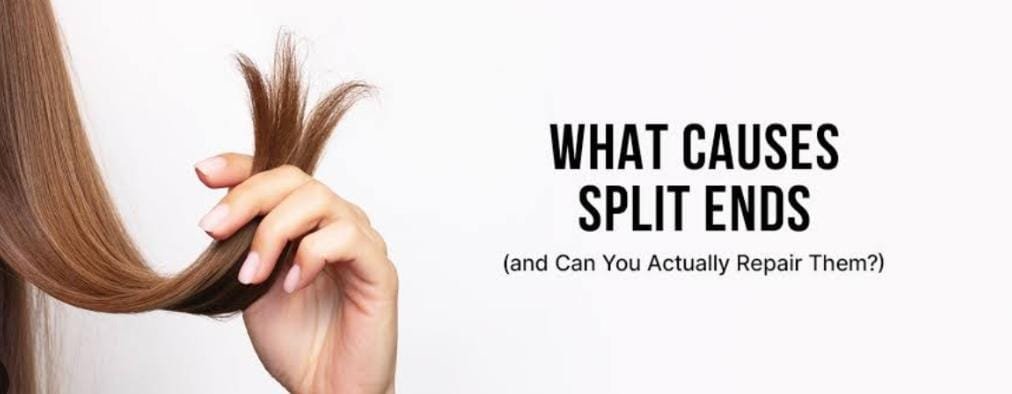
Split ends usually develop when the hair becomes weak and damaged over time. Common causes include excessive heat, frequent coloring, chemical treatments, rough brushing, over-washing, and environmental exposure.
Using flat irons, curling irons, and high heat from blow dryers too often can weaken the hair. The American Academy of Dermatology recommends limiting excessive heat and using low or medium settings when heat styling.
Roughly brushing or combing the hair can also contribute to damage. Being gentle with wet hair is especially important because wet hair can break more easily.
Best Hair Products for Split Ends
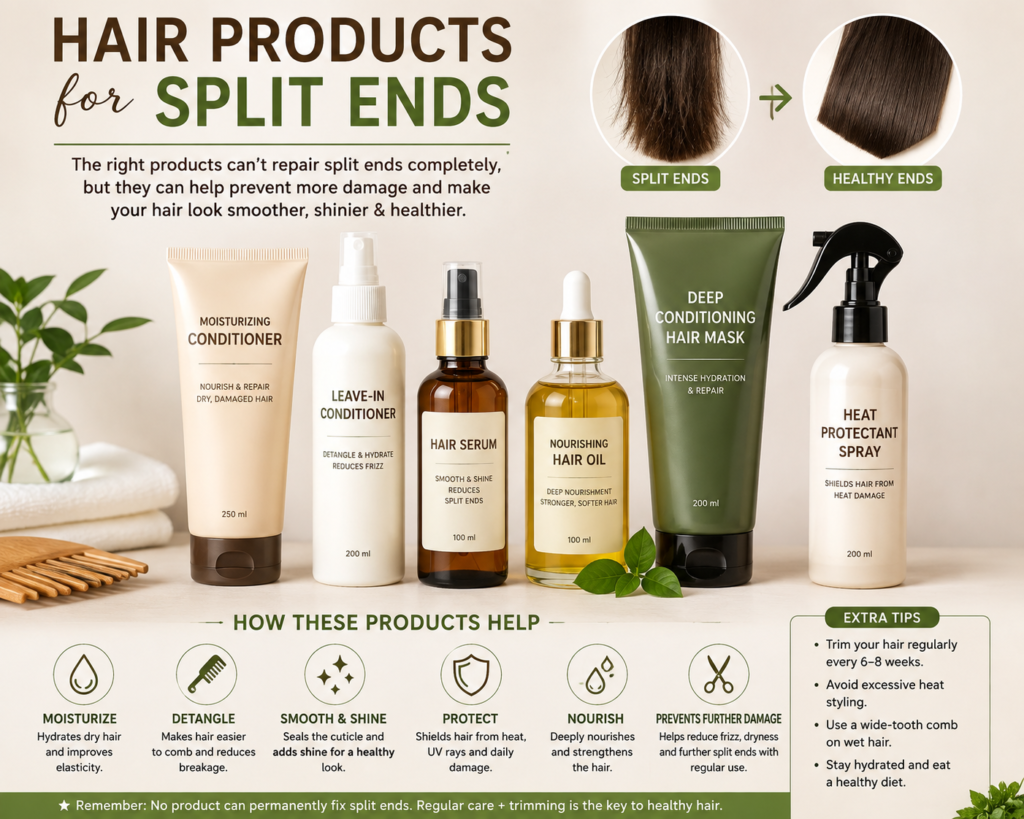
1. Moisturizing Conditioner
A good moisturizing conditioner is one of the most essential products for dry and split-prone hair. Conditioner helps moisturize, detangle, and smooth the strands, making them easier to manage.
Apply conditioner mainly to the lengths and ends of your hair. Dermatologists specifically recommend conditioning after shampooing because conditioner can coat the strands and help reduce breakage and split ends.
2. Leave-In Conditioner
A leave-in conditioner can provide an extra layer of conditioning after washing. It can make the hair easier to detangle and help reduce friction during styling.
For dry or curly hair, a leave-in conditioner can be particularly useful because these hair types often need additional moisture. The American Academy of Dermatology notes that leave-in conditioners and detanglers can help reduce breakage, split ends, and frizz.
3. Hair Serum for Split Ends
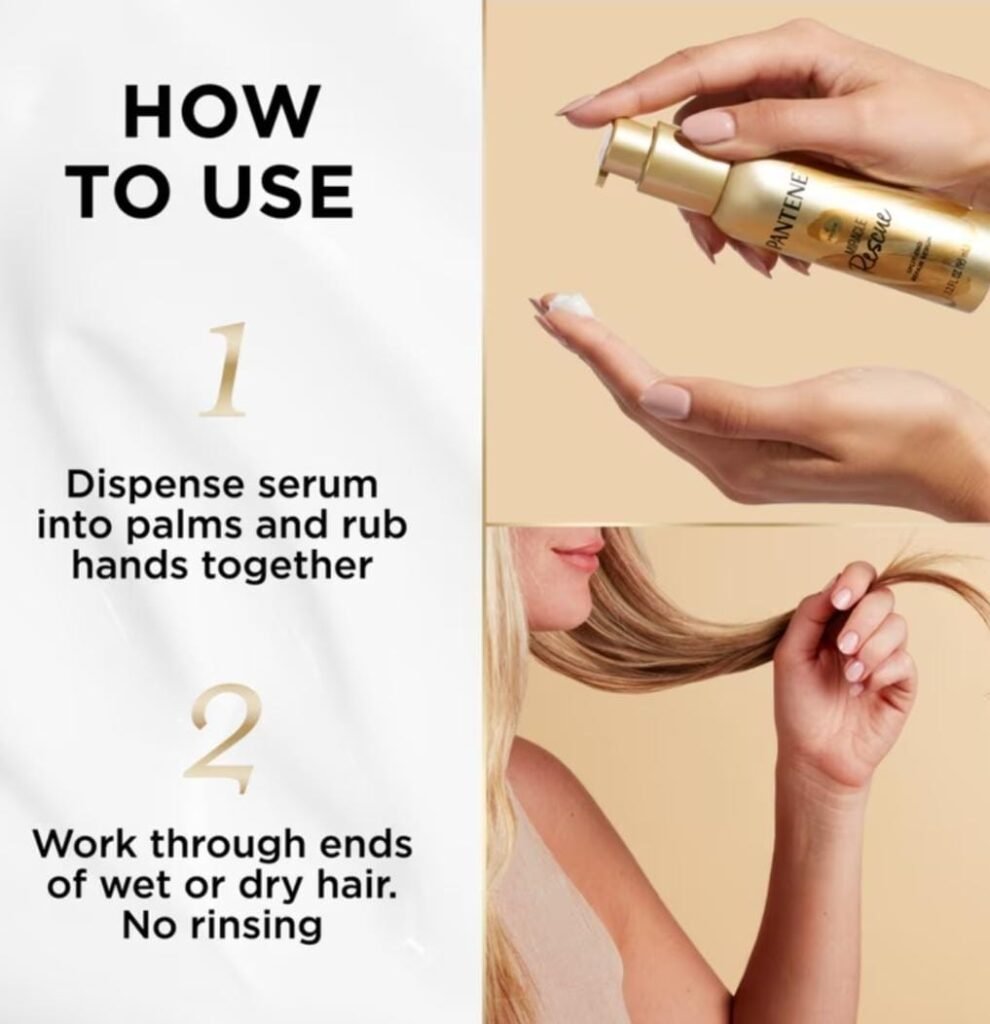
A lightweight hair serum can temporarily smooth the appearance of split ends and make the hair look more polished. Serums are especially useful when you want a quick silky and glossy finish.
Apply a small amount to the ends rather than using too much product. Excessive serum can make fine hair appear greasy or weighed down.
4. Hair Oils
Natural oils such as argan oil, coconut oil, jojoba oil, or avocado oil can be incorporated into a hair-care routine depending on your hair type.
Hair oils can help reduce the dry appearance of the ends and add shine. They should be viewed as conditioning and protective products rather than permanent split-end repair treatments.
For an extra-nourishing treatment, apply a small amount of oil to the lengths and ends before washing your hair.
5. Deep Conditioning Hair Masks
A deep-conditioning hair mask can be a powerful addition to a routine for dry, rough, or damaged hair. These treatments are designed to provide more conditioning than a regular rinse-out conditioner.
Use a moisturizing mask according to the product instructions, focusing on the lengths and ends. This can help hair feel softer, smoother, and easier to manage.
6. Heat Protectant
If you regularly use a blow dryer, straightener, or curling iron, a heat-protecting product should be an important part of your routine.
Excessive heat can damage hair and contribute to dryness and breakage. Dermatologists recommend reducing heat exposure and using low or medium settings when possible.
Apply the heat protectant according to its instructions before using styling tools.
Can Hair Products Actually Repair Split Ends?
This is an important question. Most hair products cannot permanently repair a split end because the damaged hair shaft is no longer living tissue. However, conditioning products and serums can temporarily coat and smooth the damaged area, making the hair look healthier.
For noticeably split ends, trimming is the most direct way to remove the damaged section. After trimming, a consistent hair-care routine can help reduce the chance of additional splitting.
How to Choose the Right Product for Split Ends
The best product depends on your hair type and level of damage.
If your hair is fine, choose lightweight conditioners and serums that will not make your hair heavy.
If your hair is thick or curly, richer conditioners, leave-in products, and nourishing oils may provide better moisture and manageability. Dermatologists note that curly and coily hair can be more prone to dryness and breakage, making proper conditioning particularly important.
If your hair is color-treated, look for moisturizing products designed for chemically treated hair and minimize unnecessary heat styling.
If your hair is very dry or damaged, consider combining a moisturizing conditioner, weekly deep-conditioning treatment, leave-in conditioner, and heat protectant.
Simple Routine for Split Ends
A simple routine can make a noticeable difference in the appearance and manageability of your hair.
Start by washing your scalp with a gentle shampoo. Follow with a moisturizing conditioner, paying particular attention to the ends. After washing, gently remove excess water instead of aggressively rubbing your hair with a towel.
Apply a leave-in conditioner or detangler while the hair is damp. If you plan to use heat, apply an appropriate heat-protecting product before styling.
Once your hair is dry, you can apply a small amount of lightweight serum or oil to the ends for extra shine and smoothness.
This effective routine focuses on reducing unnecessary damage while keeping the hair conditioned and manageable.
Ingredients to Look For
When shopping for products for split-prone hair, look for ingredients commonly used in conditioning and smoothing formulas, such as:
- Argan oil
- Coconut oil
- Avocado oil
- Jojoba oil
- Glycerin
- Panthenol
- Fatty alcohols such as cetyl or stearyl alcohol
- Conditioning agents designed to smooth the hair
The right combination depends on your hair type. A product that works beautifully for thick curly hair may feel too heavy for fine straight hair.
Hair Habits That Can Prevent More Split Ends
Products are only one part of split-end prevention. Your everyday habits also matter.
Avoid excessive heat styling and use the lowest effective heat setting. Try not to brush your hair unnecessarily, and use gentle detangling techniques. Dermatologists also recommend being careful with wet hair because it is more vulnerable to breakage.
Regular conditioning is another valuable step. If your hair is prone to dryness, a leave-in conditioner can provide additional support between washes.
If your ends are already severely split, trimming them can help remove the damaged portion rather than trying to hide the problem with styling products.
Final Thoughts
Finding the right hair products for split ends can help transform dry, rough-looking hair into a smoother and more manageable style. Moisturizing conditioners, leave-in treatments, hair serums, nourishing oils, deep-conditioning masks, and heat protectants can all play a useful role in a healthy hair-care routine.
However, remember that products cannot permanently repair an existing split end. The best approach is to trim severely damaged ends and then protect your hair with consistent conditioning, gentle handling, and reduced heat exposure.
With the right routine, your hair can look smoother, shinier, healthier, and beautifully manageable while you work toward preventing new split ends.